Society has gotten mighty comfortable hounding women about their reproductive choices. Everybody has an opinion about what a woman should do, what she
Society has gotten mighty comfortable hounding women about their reproductive choices. Everybody has an opinion about what a woman should do, what she should believe, and what decisions she ought to make. Some people will spend hours arguing about the value of a child’s life before birth.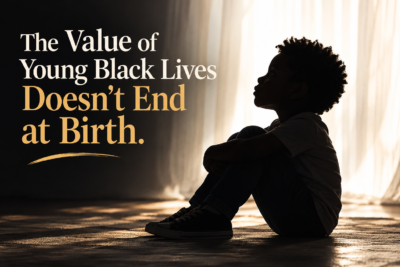
But once that child arrives, we begin learning some uncomfortable truths about how much people actually value children.
And whether they value children or simply the children they know, love, recognize, and consider their own.
Because children don’t stop needing protection when they’re born. They need it in grocery stores, schools, neighborhoods, parks, shopping malls, and everywhere else adults have authority over them.
They need protection when they’re sweet and cooperative. They need it when they’re loud, difficult, frightened, confused, or making mistakes. They even need protection when they’ve done something wrong.
And yes, that includes Black children.
I’ve been thinking about the Black children who have been shot and killed over material possessions. Children whose alleged wrongdoing becomes the center of the conversation before we’ve even finished asking why an adult decided to use deadly force.
A child may steal something. A child may run away when confronted. A child may make a foolish decision that requires correction, consequences, and accountability.
But what happened to the adults?
When did protecting merchandise become more important than protecting a young human life? When did we become so comfortable discussing what a child should have done differently that we stopped examining what the grown person with the weapon should have done?
And I don’t want to hear that Black communities don’t care about violence among our own. We’ve buried our children, organized against violence, confronted people doing harm, supported grieving families, and demanded justice for generations.
Every community has violence and wrongdoing. Every single one. Some communities have the luxury of seeing their problems treated as isolated incidents rather than evidence of something wrong with their entire race.
Black communities don’t always receive that courtesy.
Too much reporting has taught people to recognize Black communities by their troubles while overlooking the families, teachers, advocates, neighbors, and young people doing beautiful things every day. And when crimes in other communities receive less attention and analysis, the public can walk away believing it has seen the whole picture.
You can tell a lie by leaving out enough of the truth.
That distorted picture has consequences. Especially for children who are already growing up in a society where people may see them as older, more threatening, and less innocent than they actually are.
We ought to be deeply concerned about that.
Because adults have responsibilities that children do not. A grown person who owns a store, carries a weapon, wears a badge, or holds authority over children has an obligation to exercise judgment and restraint.
Children are still learning. That’s part of being a child.
And when they make mistakes, our responsibility is not to abandon their humanity. It’s to respond in ways that are lawful, proportionate, and protective of life.
I also think we need to examine how quickly some people can find compassion for an adult who kills a child while struggling to find any compassion for the child who died.
We hear about the adult’s fear, livelihood, reputation, and intentions. We hear about the value of the merchandise. We hear what the child allegedly did.
Well, I want to know about the child’s life.
Who loved that child? What made that child laugh? What did that child dream about becoming? What possibilities disappeared when somebody decided that an encounter over property needed to end with a gun?
And why do we sometimes have to work so hard to get people to ask those questions?
I am not suggesting that children should never face consequences. I’m saying that consequences must never become an excuse for treating their lives as disposable.
Nor should a Black child’s death become easier to excuse because the person responsible owns a business or holds a position of authority. Those circumstances deserve examination, not automatic deference.
We also need to stop confusing affection for our own children with a genuine commitment to the well-being of children.
It’s easy to love the child who looks like you, belongs to your family, attends your church, or lives in your neighborhood.
But what about the child you don’t know? The child whose parents you dislike? The child from the neighborhood you’ve been taught to fear? The child accused of wrongdoing?
What do you believe that child deserves?
That’s where some of our finest speeches about protecting children meet the real world.
And it isn’t only about shootings. It’s about how we discipline children, how we investigate their complaints, how we respond when adults abuse them, how we treat children in poverty, and whether we are willing to challenge institutions that fail them.
A society that truly values children doesn’t reserve its concern for children who are easy to love.
It doesn’t require a child to be perfect before adults are expected to behave responsibly.
And it doesn’t demand that Black families solve every problem within their communities before their children become worthy of protection from people outside those communities.
I want us to think more seriously about the obligations that come with claiming to value human life. Not just what we say about children before they’re born, but what we’re willing to do for them after they arrive.
Because children are not merely extensions of their parents, representatives of their neighborhoods, or symbols in somebody else’s political argument.
They are human beings in their own right.
And if I have to convince you that all children have value, including Black children, that’s a you problem.
The rest of us have children to protect.