Young people are speaking up about their understanding of their rights. Sometimes they get it right and sometimes th
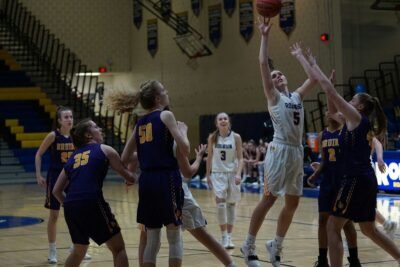
Photo by Jeffrey F Lin/unsplash
Young people are speaking up about their understanding of their rights. Sometimes they get it right and sometimes they get it wrong, just like we did when we were their age. I was disappointed that this went down this way because I do enjoy seeing the young girls excited about something that represents them. Women’s basketball.
So if you have not heard, here’s what happened…
During Tuesday night’s WNBA game between the Seattle Storm and Indiana Fever, two 16-year-old girls were sitting courtside (in $1,300 seats gifted by an anonymous donor) wearing shirts from XX-XY Athletics, a company that advocates for protecting women’s sports. They held up a handmade sign reading “Thank you, Sophie, for speaking up for girls!” — a reference to Fever guard Sophie Cunningham’s recent comments opposing males competing in women’s sports.
According to the girls’ account, given to journalist Brandi Kruse on the unDivided podcast, Storm co-owner Celeste Keaton approached them during the game. Keaton reportedly told them “Jesus loves everyone,” then said she hoped Jesus could forgive them for their sins, before escalating to calling them “f—ing insane.”
I saw the video of the two girls after the game. They seemed taken aback and it sounded as if they were harassed by others simply for standing up for girls. One of the girls said she’d never been yelled at like that before, and that she’d been criticized online, but it didn’t affect her the same way since that’s just people online — but this took her by surprise because she’d expected Keaton to be nice, and instead she started screaming and cussing at them. One of the two girls was left in tears.
The Storm’s statement said the team is “committed to creating an inclusive environment where every fan is treated with respect.” That’s a nice statement. But the incident shows that promise didn’t extend to fans whose views the co-owner disagreed with even when communicated in a respectful manner.
Based on what’s been reported:
- The gap between stated values and conduct at the top. “Inclusive” language usually gets applied to identity and belonging — but here it was a co-owner, not a rogue fan, who allegedly targeted two teenagers for their viewpoint, using religious shaming and profanity. Simply because they were fans of a woman who spoke up for girls.
- The security response. Kruse says she tried to get arena staff involved and was told to email the front office instead — while the arena’s own code of conduct prohibits abusive language and normally allows for ejection. That’s a case where enforcement wasn’t applied evenly.
- The apology itself. Gilder’s statement was generic and didn’t name Keaton or address the specifics — which the girls’ parents called out directly. I do wonder whether an “inclusive environment” claim means much if the response to a violation is vague and doesn’t come from the person responsible.
- The suspension math. Five games, an undisclosed fine, no word yet on removal from ownership — worth asking whether that’s proportionate given it was an owner, not a fan.
Kruse also said the girls weren’t forced to put their signs down, contrary to some online claims — they chose to lower them after the alleged harassment.
The Seattle Storm have since issued an apology over the incident, and there are reports the WNBA took punitive action against Keaton.
The WNBA fined Celeste Keaton and suspended her from attending the Storm’s next five home games. The league also fined the team itself an undisclosed amount. As a result of the suspension, Keaton won’t be able to attend another Storm home game until September.
Storm majority owner Ginny Gilder said in a statement, “We are aware one of our co-owners made comments to two fans in attendance at last night’s game. We apologize that this happened. Everyone who attends a Storm game deserves to feel welcome, and we remain committed to creating an inclusive environment where every fan is treated with respect.” The girls’ parents, Elizabeth and Brendan Wilson, called that statement “incredibly generic and not heartfelt” and said any apology should come directly from Keaton.
One of the two girls, Ahnaleigh Wilson of East Wenatchee, is a track and cross-country athlete at Eastmont High School who became a public advocate for sex-based categories in girls’ sports after finishing second as an eighth-grader in a race at a 2024 meet.
Cunningham publicly supported the fans once the suspension was reported, tweeted her support and promised them gifts, and called Keaton’s actions “truly embarrassing.” She also wrote, “Truly believe there is a safe space and love for EVERYBODY. Biological girls, biological boys, trans women, and trans men. Everyone is welcome at my table! You can disagree and still be kind.”
Many fans expressed outrage at the suspension itself, arguing Keaton had done nothing wrong. Not surprised. Of course we know that we live in a world where young people are attacked by adults and too few see it as an issue. This is also the world where girls are expected to take everything on the chin, remain silent about their pain, and be good and faithful servants to everyone else but themselves. And NEVER EVER advocate for their own rights, opportunities, and safety. Never that.
But, “no one is being erased.” No one is being silenced.” Are we sure about that? That’s odd. Doesn’t sound “inclusive” of women and girls dissenting voices to me.
Twelve Anti-Bullying Principles We Should Aspire to for Girls – Rosa’s Children
Real Courage Is Protecting—Not Violating—Boundaries – Rosa’s Children
Can We Talk About Girls? – Rosa’s Children
Questions to Uphold Girls Boundaries in Sports – Rosa’s Children