People keep saying that parents who think about homeschooling are taking something important away from their children. That only makes sense if school
People keep saying that parents who think about homeschooling are taking something important away from their children. That only makes sense if schools are consistently keeping children safe, treating them with respect, and holding clear boundaries for everyone. Right now, a lot of families are not seeing that.
Photo by Taylor Heery
What they are seeing is confusion about what schools are responsible for, uneven protection depending on the classroom or district, and situations where children are expected to deal with harm while adults sort out policies. Parents are not reacting to ideas or headlines. They are responding to what they see with their own eyes and what their children are telling them.
When a system becomes unclear about safety and boundaries, parents don’t become unreasonable for noticing. They become more alert. More protective.
School shootings and mass violence risk
Children are being trained to survive violence before they are taught how to fully live. Lockdown drills, barricade strategies, and the constant awareness that something could happen shape how safe school actually feels day to day.Inconsistent physical security measures
Safety depends too much on the specific school, the condition of the building, and who is on duty. A locked system in one place, an unlocked side door in another.Delayed or unclear communication during emergencies
When something happens, parents need clarity immediately. Too often, they receive partial information, delayed alerts, or confusion that deepens fear.Bullying and peer violence
Harm between students is often tolerated until it escalates. Children report patterns long before adults intervene in a meaningful way.Sexual misconduct and boundary violations by staff or peers
There have been repeated cases where boundaries were crossed and systems were slow to act. Prevention and accountability are not always consistent.Handling of sexual harassment complaints among students
Girls are still being told to adjust themselves—how they dress, where they walk, who they avoid—instead of the behavior being addressed directly.Privacy concerns around sensitive student information

Families are navigating unclear lines about what schools share, what they don’t, and when parents are included in decisions affecting their children.Tension between parental authority and school policies
Parents are encountering situations where decisions about their children are made without clear communication or alignment.School-based policing and use of force
Children have been restrained, handcuffed, or physically escalated in situations that could have been handled differently. Black children and disabled children are affected at higher rates.Disciplinary disparities
Black children are more likely to be labeled disruptive and punished more harshly for similar behavior. Over time, that shapes opportunity and self-perception.Inadequate mental health support
One counselor for hundreds of students leaves many children without support, especially those dealing with violence, instability, or stress.Overcrowding and understaffing
Teachers stretched thin cannot monitor, intervene, and support at the level children need.
Transportation safety concerns
The bus can be one of the least supervised spaces, where bullying and intimidation go unchecked.Emergency preparedness gaps
Drills exist, but real-world readiness varies. Families question how systems would actually respond under pressure.Lack of accountability transparency
When harm occurs, families often struggle to get full, direct answers. Trust erodes in that silence.Unnecessary micromanagement of Black children’s hair and appearance
Black children continue to be singled out over natural hair and protective styles. It redirects time and energy toward control instead of care and signals that their natural state is a problem. Efforts like the CROWN Act exist because this has been persistent.The treatment of girls and the normalization of sexism
Many girls are navigating environments where harassment is minimized, boundaries are questioned, and assertiveness is labeled as attitude.
They are told to “be careful,” “be nice,” or “not make a big deal,” while also being expected to manage the behavior of others.
In some spaces, there has been a noticeable rise in dismissiveness toward girls’ concerns, increased tolerance for disrespectful language, and pressure to accept discomfort as normal.
When girls speak directly about what is happening, they are sometimes framed as overreacting instead of being heard. That teaches them to shrink instead of stand.
Taken together, this is what families are responding to:
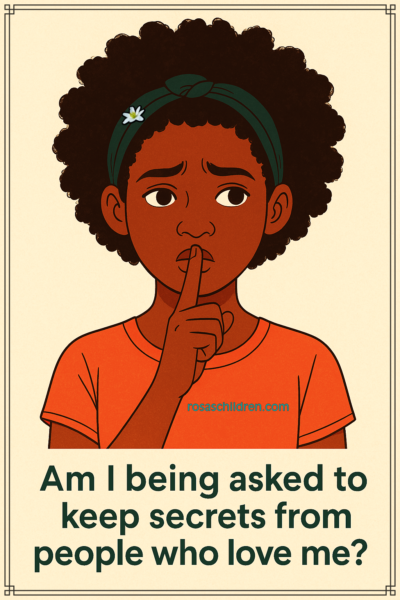
There is a sense of control and entitlement that must be confronted. Recently, we’ve seen a few of those cases go all the way to the Supreme Court. School systems feeling entitled to keep secrets from parents and caregivers? Come on! The adults who felt entitled to enforce this were trained in elementary school about not keeping secrets.
Children are corrected quickly over small things like appearance and tone.
But when it comes to safety, dignity, and stepping in before harm gets worse, the response is not always as strong or as fast.
Parents are not imagining that imbalance.
Children are living inside it.
No one is asking schools to be perfect. But there does need to be alignment. Children should be safe. All of them. Not some. Not most. All.
They should be in environments where boundaries are clear, respected, and acted on without hesitation. Until schools fully step into that responsibility, parents are going to keep asking questions. And they’re going to make decisions based on what is actually happening—not what they’re told should be happening.
Predators Rely on Your Silence—Let’s Take That Power Away – Rosa’s Children