When adults talk about children, we often reach for simple answers.“Spanking made us disciplined.” “Spanking traumatized everybody.” “Don’t
When adults talk about children, we often reach for simple answers.
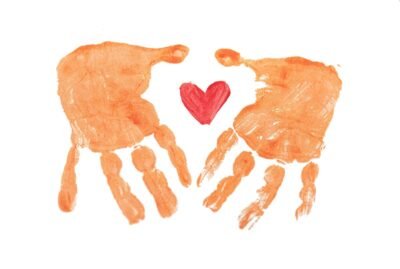
Photo by Rod Long
“Spanking made us disciplined.”
“Spanking traumatized everybody.”
“Don’t spank.”
“Kids today have no consequences.”
“Put them in therapy.”
“Put them on medication.”
“Leave them alone. They’ll grow out of it.”
But children are not raised by slogans.
Children are raised by ecosystems.
A child’s life is shaped by the whole world surrounding them: the home, the school, the neighborhood, the adults, the food, the sleep, the affection, the rules, the consequences, the faith or moral teaching, the safety, the supervision, the routines, the activities, the chores, the repair, the tenderness, and the people who notice when something is going wrong.
So when we talk about discipline, we have to look at the whole picture.
Not just the hand.
Not just the rule.
Not just the punishment.
Not just the diagnosis.
Not just the school report.
Not just the parent’s exhaustion.
Not just the child’s behavior.
The whole picture.
Because when we are making decisions about children’s lives and futures, black-and-white thinking can become dangerous.
It can make us too harsh.
It can make us too passive.
It can make us blame parents who are trying.
It can make us excuse parents who are harming.
It can make us over-pathologize children.
It can make us under-respond to serious behavior.
It can make us treat all children the same, even when their needs, histories, risks, strengths, and environments are not the same.
Children deserve better than shallow thinking.
They deserve adults who can hold complexity.
The Question Is Not Only “Were They Spanked?”
For many people, the conversation begins and ends with spanking.
Some adults say, “I was spanked and I turned out fine.”
Others say, “I was spanked and it wounded me.”
Both can be true.
But even those two truths do not tell the whole story.
A person who says spanking “worked” may have also had:
Loving adults in the home
Food on the table
School involvement
Chores and responsibilities
Faith, values, or moral teaching
Elders who corrected them
Family routines
Affection after correction
Community standards
Adults who followed through
A sense of belonging
Protection from danger
People who expected something from them
That is not just spanking.
That is structure.
That is an ecosystem.
So it may be that some people are giving spanking credit for what the whole village actually did.
The belt was loud.
The switch was memorable.
The pop on the hand stood out.
But what shaped the child may have been the steady presence around them.
The meals.
The prayers.
The chores.
The teacher conferences.
The auntie who noticed everything.
The grandmother who did not play.
The father who checked homework.
The mother who gave affection and correction.
The neighbor who called home before trouble grew legs.
The coach who demanded discipline.
The church lady who saw through foolishness.
The family expectation that children represented more than themselves.
That was not one tool.
That was a world.
Not Spanking Is Not the Same as Raising
On the other side, we also need to be honest.
Simply not spanking a child does not mean the child is being guided well.
A child can be unspanked and still neglected.
A child can be unspanked and still unsupervised.
A child can be unspanked and still emotionally abandoned.
A child can be unspanked and still allowed to terrorize siblings, disrespect teachers, hurt other children, destroy property, lie without consequence, or drift toward danger while adults look away.
That is not gentle parenting.
That is absence.
A child does not need to be hit to be corrected.
But a child absolutely needs to be corrected.
Correction is not cruelty.
Correction is how adults say, “I see you. I love you. I am not letting you become someone who harms yourself or others.”
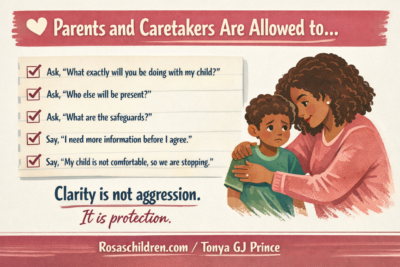
Children need adults who can say:
“No.”
“Try again.”
“That was wrong.”
“You need to repair what you damaged.”
“You are not going there.”
“You cannot keep that phone tonight.”
“You will apologize.”
“You will help clean this up.”
“You are loved, but you are not in charge of this house.”
“You are heard, but you are not allowed to harm.”
That is not abuse.
That is loving authority.
And loving authority has gone missing in too many places.
Some Children Need More Than Conversation
There is another truth we must say carefully.
Not every child can be reasoned with in the same way at the same stage.
Some children respond quickly to words.
Some need repetition.
Some need consequences they can feel without being physically harmed.
Some need less screen time.
Some need more sleep.
Some need structure so steady it becomes boring.
Some need to be separated from dangerous peers.
Some need help regulating their bodies.
Some need adults to stop being afraid of their anger.
Some need evaluation for learning differences, trauma, impulse control, or emotional distress.
Some need protection from what they are being exposed to online.
Some need adults to stop explaining everything and start intervening.
Some are being groomed by older peers or adults.
Some are learning cruelty from screens, homes, streets, or social circles.
Some are testing whether any adult will stand in the doorway and mean it.
When that happens, children do not need adults to panic.
They need adults to gather.
Family.
School.
Community.
Health professionals.
Mentors.
Faith leaders, when safe and appropriate.
Coaches.
Elders.
Protective adults.
People who can help build a plan.
The answer is not always a harsher hand.
The answer is not always a softer voice.
Sometimes the answer is a stronger ecosystem.
Children Need Hands Present
The future cannot be “hands off.”
It has to be hands present.
Hands that cook.
Hands that guide.
Hands that check homework.
Hands that take the phone.
Hands that show up at school.
Hands that hold a child while they cry.
Hands that block the door when danger is calling.
Hands that require apology.
Hands that teach repair.
Hands that protect siblings.
Hands that call in help.
Hands that refuse to abandon the child to chaos.
Sometimes love is a boundary.
Sometimes love is a locked door.
Sometimes love is a removed phone.
Sometimes love is calling the school again.
Sometimes love is saying, “I will not let you practice becoming dangerous.”
Sometimes love is staying close to a child who is making it hard to stay close.
That kind of love is not weak.
It is disciplined.
We Have to Stop Making Decisions From One Detail
When a child is struggling, adults often latch onto one detail.
The child was spanked.
The child was not spanked.
The child has a diagnosis.
The child does not have a father at home.
The child is poor.
The child is angry.
The child is gifted.
The child is quiet.
The child is loud.
The child has been through something.
The child is “just bad.”
But one detail is not enough.
A child’s behavior has context.
So does a parent’s response.
So does a school’s reaction.
So does a community’s failure.
So does a family’s fear.
Before we make life-altering decisions about children, we should ask fuller questions.
Is the child safe?
Are the people around the child safe?
Is the child getting enough sleep, food, movement, and structure?
Are adults supervising the child consistently?
Is the child being exposed to violence, adult content, cruelty, or dangerous peers?
Is the school involved in a meaningful way?
Are there consequences that are clear and consistent?
Is the child receiving affection, not just correction?
Is there repair after harm?
Are siblings being protected?
Is the parent overwhelmed, unsupported, or in danger?
Is there a disability, trauma history, or health issue that needs attention?
Are adults confusing gentleness with passivity?
Are adults confusing discipline with domination?
Who is helping this family carry the weight?
Those questions move us closer to wisdom.
They do not give us an easy answer.
They give us a better way to look.
Discipline With a Soul
A generation of adults was told to stop doing certain things, but many were not taught what to build in their place. Families were handed slogans when they needed systems. Parents were criticized when they needed support. Children were labeled when they needed structure. Schools were blamed when homes were overwhelmed. Homes were blamed when communities were unsafe. Communities were blamed while larger systems failed them all.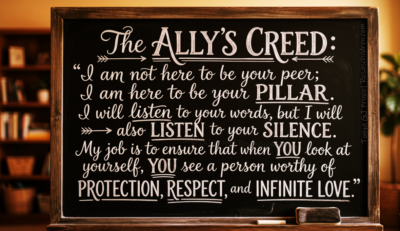
We cannot keep doing that.
Children need more than blame.
Parents need more than shame.
Schools need more than slogans.
Communities need more than nostalgia.
We need whole-picture responsibility.
The Whole Child, The Whole Home, The Whole Village
When we talk about children, we have to look at the entirety.
The whole child.
The whole home.
The whole school.
The whole village.
The whole risk.
The whole need.
The whole pattern.
The whole future.
Because a child is not raised by one moment.
A child is shaped by repeated messages.
Repeated rules.
Repeated affection.
Repeated correction.
Repeated safety.
Repeated neglect.
Repeated chaos.
Repeated tenderness.
Repeated abandonment.
Repeated belonging.
That is why we must be careful.
One child may need protection from an adult’s harshness.
Another child may need protection from adult passivity.
One child may need medical support.
Another may need boundaries.
One child may need gentleness.
Another may need firm intervention.
Most need some wise mixture of all of it.
So let us move beyond black-and-white thinking.
Let us stop asking only, “Was the child spanked?”
Let us also ask:
Was the child loved?
Was the child fed?
Was the child supervised?
Was the child corrected?
Was the child protected?
Was the child heard?
Was the child guided?
Was the child taught repair?
Was the child held accountable?
Was the child given meaningful belonging?
Was the child surrounded by adults who followed through?
Because the spanking was never the whole story.
And not spanking is not the whole solution.
The question is whether the child is held inside a living system of love, correction, structure, consequence, protection, and belonging.
That is where children grow.
That is where futures are protected.
That is where the village becomes real again.