Several recent findings, and they all point in the same direction: Black girls are still facing racism and misogyny at the same time.a
Several recent findings, and they all point in the same direction: Black girls are still facing racism and misogyny at the same time.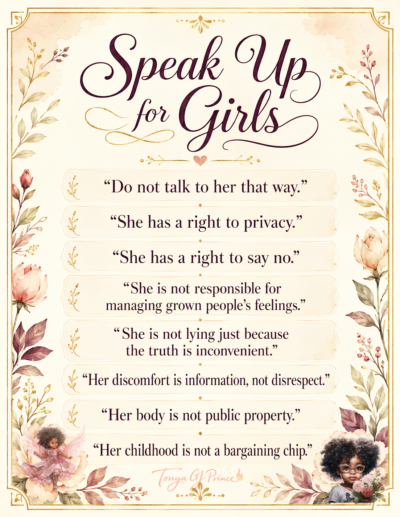
- a 2025 Women in Sport report on Black girls in the UK, which found that many Black girls had seen or experienced both sexism and racism in school.
- the 2024 U.S. Government Accountability Office report on school discipline. It found that Black girls are punished in U.S. public schools at sharply disproportionate rates. Black girls were about 15% of girls in public schools, but accounted for about 45% of out-of-school suspensions. The GAO also pointed to adultification bias, colorism, and other racial-gender bias as factors in harsher discipline.
- And Georgetown Law’s work on adultification bias remains central. Their research found that adults often see Black girls as less innocent, more adult-like, less in need of nurturing, less in need of protection, and more knowledgeable about sex than white girls of the same age. Georgetown says this bias can help explain why Black girls are treated more harshly in schools, policing, juvenile justice, and health care.
- A 2025 paper on adultification bias in large language models and text-to-image models found that some AI systems reproduced bias against Black girls, including portraying them as older, more culpable, or more sexualized than white girls. That is a chilling modern version of an old pattern.
Black girls are treated as older than they are, tougher than they are, less vulnerable than they are, more responsible than they should be, and less deserving of protection than every child deserves.
This isn’t addressed with the care, focus, and attention that it deserves. The accusations, even from colleagues who claim to care, are that you are being “divisive” or playing “cards” of some sort.
Anyway, because this issue seems to keep growing, please keep addressing it. We need to continue to make it normal and acceptable to speak up for girls.
As someone who served as a volunteer on hotlines working with children and has worked professionally with children, I know that finding the right words for their pain, horror, boundary violations, and harmful things that aren’t supposed to happen to children is hard.
I choose plain language when I speak about girls, because girls should not have to explain female reality to anyone before their safety, privacy, and dignity are honored. I TRY not to be another barrier to what they may be trying to give voice to.
It means adults learn to say plainly:
“Do not talk to her that way.”
“She has a right to privacy.”
“She has a right to say no.”
“She is not responsible for managing grown people’s feelings.”
“She is not lying just because the truth is inconvenient.”
“Her discomfort is information, not disrespect.”
“Her body is not public property.”
“Her childhood is not a bargaining chip.”
Black girls are still forced to face misogyny and racism at the same time, often while adults deny them the softness, protection, patience, and innocence that childhood requires. Racism and sexism still teach too many people to doubt, punish, adultify, and dismiss Black girls. Safe adults must interrupt that harm early and out loud.
Adultification Bias – Center for Gender Justice & Opportunity (CGJO)