A scene at a Children's Hospital.....Aunt Renee knew her nephew.She knew the boy who carried groceries without being asked, who gave up hi
A scene at a Children’s Hospital…..
Aunt Renee knew her nephew.
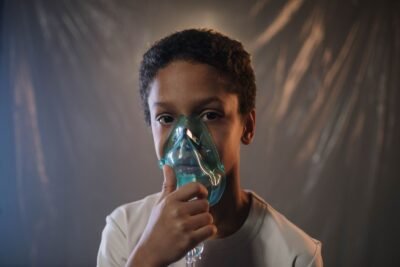
Photo by cottonbro studio
She knew the boy who carried groceries without being asked, who gave up his seat when older relatives came into the room, who could disappear into his headphones for an entire afternoon and somehow emerge when somebody opened a bag of chips three rooms away.
So when sixteen-year-old Micah began waking from anesthesia after a medical procedure, Renee was not prepared for what she saw.
Micah was confused. Then suddenly, he was fighting.
His arms came up. His body twisted against the people trying to keep him safe. When his father moved closer, Micah pushed against him too.
His father looked stunned.
This was his son. His boy had never tried to fight him.
Micah’s mother stepped forward with the instinct mothers know well. She spoke softly and reached for him, expecting that familiar voice and familiar touch to bring him back.
It didn’t.
For a moment, he seemed unable to receive comfort from her either. His mother looked hurt.
Then the doctor gave the family something they desperately needed.
A different explanation.
She told them that some children and teenagers can become confused and agitated while emerging from anesthesia. They may thrash, kick, push, cry, try to get away or appear to fight the people around them. In that state, a young person may not yet be fully oriented to where they are or understand why people are touching or restraining them.
The behavior was real.
But the story the adults were beginning to attach to the behavior might not be.
Micah’s father stopped looking at his son as though he had suddenly discovered something frightening about him.
His mother stopped trying to make sense of why her comfort wasn’t working.
They reset.
They let the medical staff keep him safe. They waited for their boy to fully return to himself.
And they thanked the doctor. She had done more than explain anesthesia.
She had interrupted a story before it hardened around a child.
Behavior Is Evidence. It Is Not Always an Explanation.
There is a lesson here that reaches far beyond a recovery room.
Adults are often very quick to describe what children are doing.
He’s aggressive.
She’s difficult.
He’s lazy.
She’s attention-seeking.
He’s disrespectful.
She’s manipulative.
He doesn’t care about school.
She has an attitude.
Sometimes children do make poor choices. Children need limits, correction, consequences and guidance. Giving children grace does not require adults to abandon boundaries.
But behavior tells us that something happened. It doesn’t always tell us why.
That difference is enormous.
Imagine a child falling asleep in class.
One adult sees laziness. Another adult discovers that the family is living in a motel and the child barely slept because people were arguing outside the door.
Same sleeping child.
Different story.
Imagine the girl who becomes furious when someone unexpectedly touches her.
Imagine the boy who keeps food in his backpack.
The teenager who seems unable to care about next month’s assignments because she doesn’t know where her family will be living next month.
The child with a disability who has spent an entire day trying to function in an environment that overwhelms their body.
The little one who cannot concentrate because there was violence at home last night.
The child who has learned to watch adult faces, voices and footsteps because knowing somebody’s mood has become part of staying safe.
The teenager who snaps at a teacher after spending the morning wondering whether the electricity will still be on when they get home.
From the outside, adults see behavior.
Inside that child may be poverty, disability, hunger, pain, abuse, instability, grief, sensory overload, exhaustion or the terrifying uncertainty of what happens to my family next?
Children don’t always have language for these things.
Sometimes they don’t understand what their own bodies are doing.
Sometimes they understand perfectly well but know better than to tell strangers their family’s business.
Sometimes they have already tried telling adults.
And sometimes survival has become so ordinary that the child doesn’t know there is anything to explain.
Adults Hold Tremendous Power Over a Child’s Story
This is where we need to become especially careful.
Adults write things down.
We write school reports, disciplinary referrals, medical notes, evaluations, court reports and case records. We talk in teacher lounges and family meetings. We brief the next shift. We tell the next counselor what kind of child is coming through the door.
A moment can become a description.
A description can become a reputation.
And eventually a reputation can arrive in the room before the child does.
Imagine how differently adults approach a child after hearing, “He’s aggressive and refuses to cooperate,” compared with, “When he becomes frightened or overwhelmed, he sometimes becomes physically defensive. We’re still learning what helps him feel safe enough to regulate.”
We haven’t erased the behavior.
We have made room for the child.
That is grace.
Poverty Can Look Like a Behavior Problem
Children experiencing poverty carry adult-sized realities inside developing bodies.
Housing can disappear.
Food can run short.
Parents can lose jobs.
Transportation can fall apart.
Utilities can be disconnected.
Families can move suddenly.
Children may overhear conversations about eviction, bills, immigration, illness, violence, incarceration or whether there will be enough money to make it through another week.
Then Monday morning comes.
The child is expected to sit under fluorescent lights, remember a password, finish an assignment, tolerate somebody tapping a pencil behind them and care deeply about something due three Fridays from now.
Some children manage remarkably well.
Others cannot.
Neither response tells us the child’s worth.
Disability Can Be Misread Too
A child struggling with sensory input, communication, attention, mobility, processing, chronic discomfort or another disability may encounter adults who interpret inability as unwillingness.
Can’t becomes won’t.
Overwhelmed becomes disobedient.
Needing more time becomes refusing.
Needing quiet becomes antisocial.
Trying to regulate becomes disruptive.
Children deserve adults willing to investigate that difference.
Harm Changes What Children Notice
Children experiencing abuse or violence can become extraordinarily attentive to things other people barely notice.
A door closing.
A change in someone’s voice.
Footsteps.
An adult drinking.
A particular look.
Someone standing between them and an exit.
A hand moving suddenly.
Those reactions may make little sense to the adult witnessing them because the adult doesn’t possess the child’s history.
That doesn’t mean every frightened child has been abused. We should never diagnose a child’s life from one behavior.
It means we remain curious.
We observe. We listen. We protect.
We ask what happened before we decide what something means.
And when a child does disclose harm, we take that seriously.
Give Children the Grace of a Second Question
The first question usually comes easily:
What did this child do?
We need another one.
What might this child be experiencing?
Not as an excuse.
As an investigation.
Maybe the answer really is that the child knowingly broke a rule and needs an appropriate consequence.
Fine.
Children can survive being corrected.
What can wound them deeply is being repeatedly misunderstood.
The child who needs accountability still deserves dignity. The child who needs protection deserves someone perceptive enough to recognize it. The child whose behavior comes from several things at once deserves adults capable of holding more than one truth.
Back in that recovery room, Micah eventually settled.
His eyes focused. His parents became his parents again. The room became a room instead of whatever confusing collection of sensations his waking brain had been trying to understand.
Imagine if nobody had explained what was happening.
His father might have gone home wondering why his son tried to fight him.
His mother might have quietly wondered why her own child wouldn’t let her comfort him.
Instead, someone who understood what they were witnessing gave the family better language.
And better language gave them grace.
We cannot possibly know everything happening inside a child.
But we can resist turning our first interpretation into their identity.
We can correct without condemning.
We can protect without humiliating.
We can document what happened without pretending we know motives we cannot know.
We can become curious about the child who suddenly changed.
We can remember that fear does not always look frightened, disability does not always look like disability, poverty does not always announce itself, and children experiencing abuse do not always behave in ways adults recognize as distress.
Sometimes a child’s behavior is telling us something.
Our responsibility is not merely to make the behavior stop.
Sometimes our responsibility is to become wise enough to hear what the child cannot yet say.
Behavior is evidence. It is not always an explanation.
Before we decide who a child is, we owe them the grace of asking what they might be carrying.