Have you ever heard about a child custody case and wondered how so many adults could be involved, so m
Have you ever heard about a child custody case and wondered how so many adults could be involved, so many warning signs could appear, and a child still end up in danger?
I think about that when I hear stories like little Eryk McCall’s.
His father, Rod McCall, fought for custody of his son in Texas. The case involved allegations against him and concerns that Eryk’s mother, Karen Hayslett McCall, was turning their son against his father.
In 2011, a jury terminated the mother’s parental rights and awarded custody to Rod.
You would think this was the beginning of a new chapter for father and son. After all the fighting, the hearings, and the uncertainty, they could finally begin building a life together.
But Eryk never got that chance.
Shortly after the court decision, his mother murdered him and then took her own life as his father outside of her residence to get Eryk.
His father had fought to bring his little boy home. Instead, he had to bury him.
When Parental Alienation Becomes a Child’s Burden
Parental alienation can be terribly damaging to children.
Sometimes it begins with little things. A parent makes cruel remarks about the other parent. A child feels guilty for enjoying a visit. Phone calls become difficult. Affection becomes something the child feels they must hide.
Before long, a child may feel responsible for managing an adult’s anger, jealousy, or disappointment. And children love their parents. That natural love can make them especially vulnerable to manipulation.
No child should have to prove loyalty to one parent by rejecting the other.
Of course, there is an important difference between a parent manipulating a child and a child genuinely fearing an abusive parent. Family courts must investigate both possibilities carefully. Calling something parental alienation should never become a shortcut for dismissing legitimate abuse concerns.
Sometimes the Courts Recognize the Pattern Too Late
This is one of my greatest concerns about these cases.
Judges, guardians ad litem, attorneys, and evaluators may each see a different piece of what is happening. One missed visit looks insignificant. One disturbing statement gets explained away. One parent’s behavior seems difficult but not necessarily dangerous.
Meanwhile, the child is living with the whole pattern.
Professionals cannot know everything, but they must be willing to connect the dots. When a parent becomes increasingly controlling, threatening, or unable to accept losing custody, those behaviors deserve serious attention.
And once a court identifies a credible danger, the transition to safety must be carefully planned. Eryk’s case reminds us that winning a custody decision and getting a child safely home are not always the same thing.
A Father Who Turned His Grief Into Education

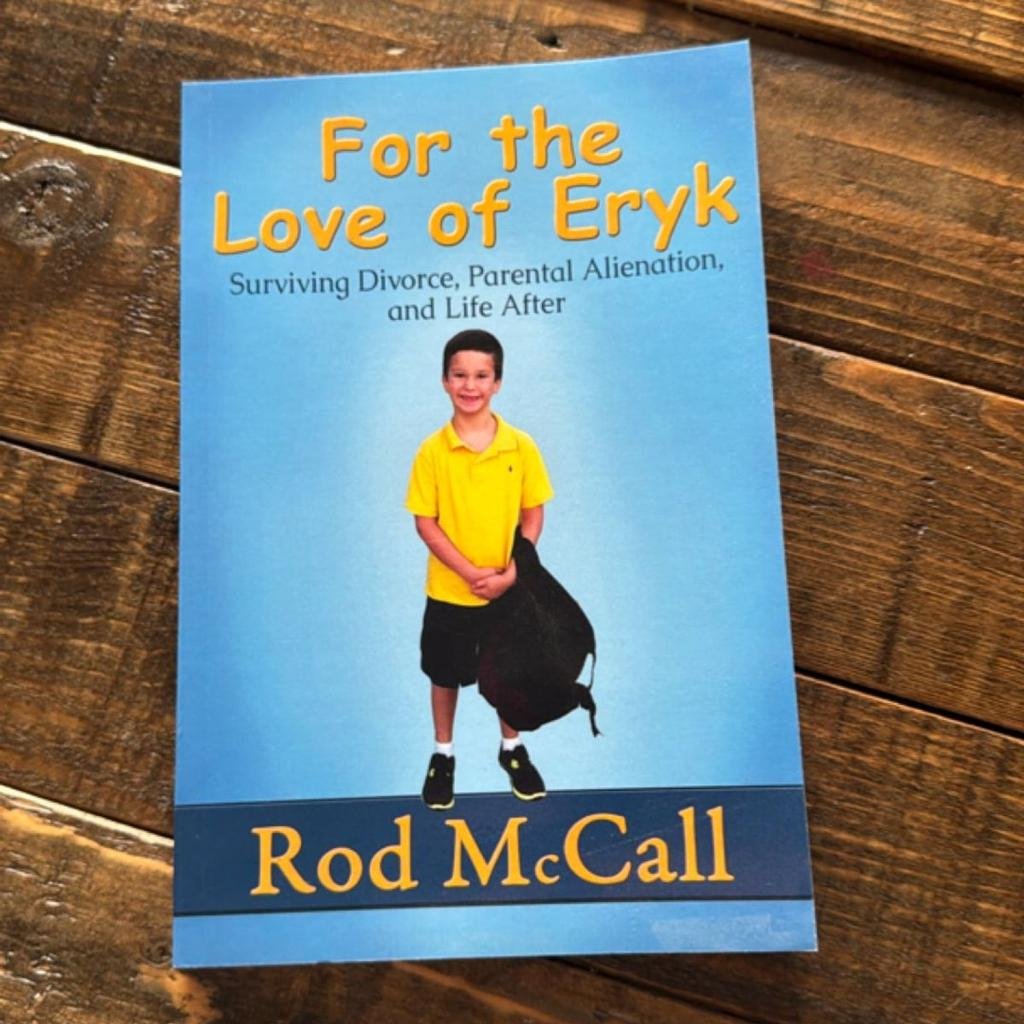
For the Love of Eryk: Surviving Divorce, Parental Alienation and Life After
Rod McCall wrote this book to share his family’s experience and help others recognize harmful patterns in custody disputes.
What stays with me is that Rod McCall did not allow his son’s story to disappear. He wrote For the Love of Eryk and began educating others about parental alienation and the devastating consequences these family conflicts can sometimes have.
There is something deeply moving about a parent trying to spare another family the pain they have endured. He cannot bring Eryk back. But perhaps another father, mother, attorney, or guardian ad litem will recognize something familiar in his story and act sooner.
That is worth sharing.
Children Should Not Have to Suffer Before Adults Take Notice
I wish we spent less time treating custody disputes as battles between adults and more time asking what children are experiencing.
Children should not have to carry their parents’ resentment. They should not become messengers, emotional caretakers, or weapons in a relationship that has ended.
And when adults notice manipulation, intimidation, threats, or genuine fear, they should take the time to understand what is happening rather than dismissing everything as ordinary family drama.
Not every custody dispute involves parental alienation. Not every parent who behaves badly is dangerous. But we cannot let those truths become reasons to overlook serious warning signs.
Little Eryk deserved to grow up. His father deserved the opportunity to raise him.
I hope his story reaches people who make decisions about children’s lives, especially those who may be looking at the beginning of a pattern they have not yet recognized.
Because the time to protect a child is while that child is still here. And no parent should have to write a book about losing their child before the rest of us learn to listen.