There is a profound, aching weight in recognizing a pattern that has been woven into the fabric of this country for generations. When we look at the h
There is a profound, aching weight in recognizing a pattern that has been woven into the fabric of this country for generations. When we look at the history of how Black children have been treated, we are forced to look at a structure that has repeatedly valued property over the precious lives of our babies.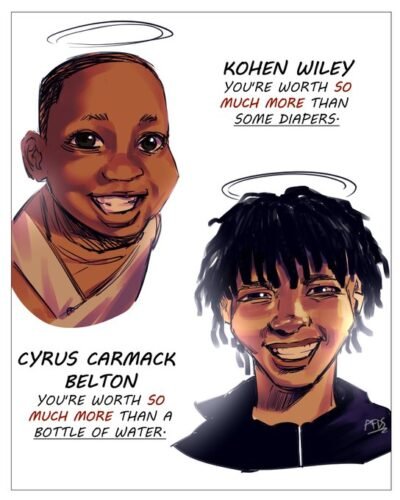
To say that this is unacceptable is an understatement. It is a devastating stain on our collective humanity. Every community experiences pain, and every community experiences crime. We know that deep poverty, generations of unaddressed trauma, and a severe lack of resources create the conditions where survival becomes a daily battle. To heal that, more money, more love, and more resources need to flow directly into these communities to fix the root issues.
But there is a second, more insidious layer to this problem. When the larger system signals that a Black child’s life is worth less than a bottle of water, a bottle of juice, or a pack of diapers, it exacerbates the pain. When the government and the justice system refuse to protect our children—when they go into deep denial, acquitting those who hunt our children down or dismissing these tragedies as isolated incidents—nothing can be solved.
This is not a new phenomenon. It stretches back further than many want to imagine. Below is just a fraction of the devastating list of Black children whose lives were cut short over petty allegations of theft or shoplifting, showing just how deeply entrenched this pattern truly is.
A Timeline of Valuation: Property vs. Black Lives
1892 — Little Willie (Age Unknown)
The Allegation: Accused of stealing a pocketknife or a small amount of change.
The Outcome: In the post-Reconstruction South, racial terror lynchings were frequently sparked by accusations of minor theft against Black youth, establishing early on that property disputes could carry a summary death penalty for Black children without a day in court.
1955 — Emmett Till (Age 14)
The Allegation: Accused of whistling at a white woman and allegedly taking candy from a country store counter.
The Outcome: While famously remembered for the perceived social transgression, the entire encounter began at a small grocery store over a petty transaction. Emmett was abducted, brutally tortured, and murdered, exposing the global community to the horrific lengths the system would go to protect white supremacy over a child’s life.
1991 — Latasha Harlins (Age 15)
The Allegation: Accused by a store owner of trying to shoplift a $\$1.79$ bottle of orange juice.
The Outcome: Security footage later proved Latasha had the money in her hand to pay. As she turned to leave after a altercation, she was shot in the back of the head. The shooter received probation and community service—no jail time—sending a clear, agonizing signal from the courts about the value placed on a Black girl’s life.
2010 — Kalief Browder (Age 16)
The Allegation: Accused of stealing a backpack.
The Outcome: While Kalief wasn’t shot on the street, the system itself acted as the executioner. He was sent to Rikers Island for three years without a trial, spending nearly 800 days in solitary confinement because his family couldn’t afford a $\$3,000$ bail. Though charges were dropped, the trauma led him to take his own life at age 22.
2023 — Cyrus Carmack-Belton (Age 14)
The Allegation: Wrongly suspected by a store owner of shoplifting four bottles of water.
The Outcome: Cyrus did not steal the water and had put the bottles back. He was chased out of the store and shot in the back while running away. In June 2026, a jury acquitted the store owner of murder, reopening a deep, intergenerational wound in the community.
2026 — Kohen Wiley (Age 1)
The Allegation: A police response to the alleged shoplifting of a pack of diapers at a local Walmart.
The Outcome: In June 2026, an officer fired into a moving vehicle while responding to the call, striking and killing 1-year-old Kohen as he sat in his mother’s lap. The legal state apparatus initially described the infant as a “fleeing juvenile,” showing the immediate systemic pivot toward dehumanization and denial.
“When the system goes into denial and will not address itself, then nothing can be solved. This must cease.”
We cannot heal the generations of pain, nor can we effectively invest the resources needed to cure poverty, if the foundational system remains in a state of absolute denial about its own bias. We must hold a mirror up to this structure. We must look at these names, remember their faces, and declare with a heart for all people—and most certainly for our precious Black children—that this unacceptable pattern must cease.
All political candidates ought to be invested in addressing these issues, and they ought to be able to say so to every community’s face. Black children are beautiful and deserve our love, protection, and our best. Yell that out like you yell those other slogans.
If Children Are Not Safe, What Does Justice Mean? – Rosa’s Children