Gratitude is an important valueFreedom is not only the right to go where you want, say what you think, and dream about your future. Freedom also m
Gratitude is an important value
Freedom is not only the right to go where you want, say what you think, and dream about your future. Freedom also means knowing that someone before you carried heavy things so you could stand in a wider place.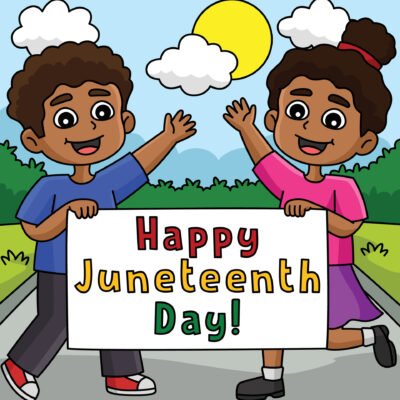
Long before many children today were born, there were people who were told they had no rights. They were told they did not own their own bodies, their own time, their own families, or even their own names. Children were born into danger. Mothers and fathers had to love their children in a world that could separate them. Grandparents had to teach courage while living under cruelty.
And still, they dreamed.
They dreamed of children who could read.
They dreamed of children who could rest.
They dreamed of children who could walk safely down the road.
They dreamed of children who could laugh without fear.
They dreamed of children who would know their own worth.
That is why Juneteenth is not just history. It is a reminder that children are not accidents in the world. Children are part of a long story. They come from people who prayed, worked, resisted, protected, taught, cooked, cleaned, marched, organized, and kept going when life was hard.
Sometimes adults say, “We sacrificed for you.”
When those words are used to shame a child, that is not right. Children should not be made to feel like they are a burden. Children should not be told that love is a debt they must spend their whole lives repaying.
But when those words are used with love, they can mean something beautiful.
They can mean, “You matter.”
They can mean, “Your life has value.”
They can mean, “Please do not throw away the chances that others hoped you would have.”
They can mean, “You come from people who survived, and we want you to grow.”
That kind of sacrifice is not a bill.
It is a bridge.
A bridge helps you cross from one place to another. The people before us built bridges with tired hands. Some built them through prayer. Some built them through work. Some built them through courage. Some built them by protecting children the best way they knew how.
Now the question for today’s children is not, “How do I repay everything?”
No child can repay all that came before them.
The better question is, “How do I walk across this bridge with care?”
You can honor sacrifice by learning.
You can honor sacrifice by telling the truth.
You can honor sacrifice by respecting your body and your boundaries.
You can honor sacrifice by listening to wise elders.
You can honor sacrifice by protecting younger children.
You can honor sacrifice by using your voice when something is wrong.
You can honor sacrifice by remembering that freedom is precious.
Gratitude is one of those values that keeps a people human.
Not fake gratitude. Not “be thankful for crumbs.” Not the kind that tells harmed people to smile while someone mistreats them. That is not gratitude. That is obedience dressed up pretty.
Real gratitude is different.
Real gratitude says, “I know I did not get here alone.”
It says, “Somebody loved me, taught me, carried me, prayed for me, fed me, corrected me, protected me, or opened a door I did not even know was locked.”
It does not erase pain. It does not excuse bad parenting. It does not require silence about harm. But it does prevent a person from becoming spiritually rootless, acting as if every comfort, every chance, every lesson, every bit of safety appeared out of nowhere.
Gratitude is memory with manners. Gratitude is not a chain around the child. It is a root beneath the child.
For children, gratitude helps them understand that love often has labor inside it. The meal, the ride, the clean clothes, the school forms, the late-night worry, the “no” that protected them, the discipline that kept them from walking into foolishness. Those things may not feel glamorous, but they are part of care.
For Juneteenth, gratitude is central. Not because Black people should be grateful for delayed freedom. No. We absolutely should not. The delay itself was an injustice. But we can be grateful for the people who endured, resisted, taught, escaped, organized, sang, prayed, protected children, and carried truth forward when the nation refused to tell it.
Juneteenth tells children, “You are not here by yourself.” You are standing in a story bigger than one day, one family, one classroom, or one problem. You come from people who wanted children to live, grow, and be free.
So walk with your head up.
Ask questions.
Learn the stories.
Respect the bridge.
And remember this: the sacrifices of the people before you were not meant to trap you. They were meant to help you cross into a life with more truth, more safety, more wisdom, and more room to become who you were created to be.