I'm deeply concerned. Black children in America are being asked to survive conditions they did not create.They are navigating schools, streets, st
I’m deeply concerned. Black children in America are being asked to survive conditions they did not create.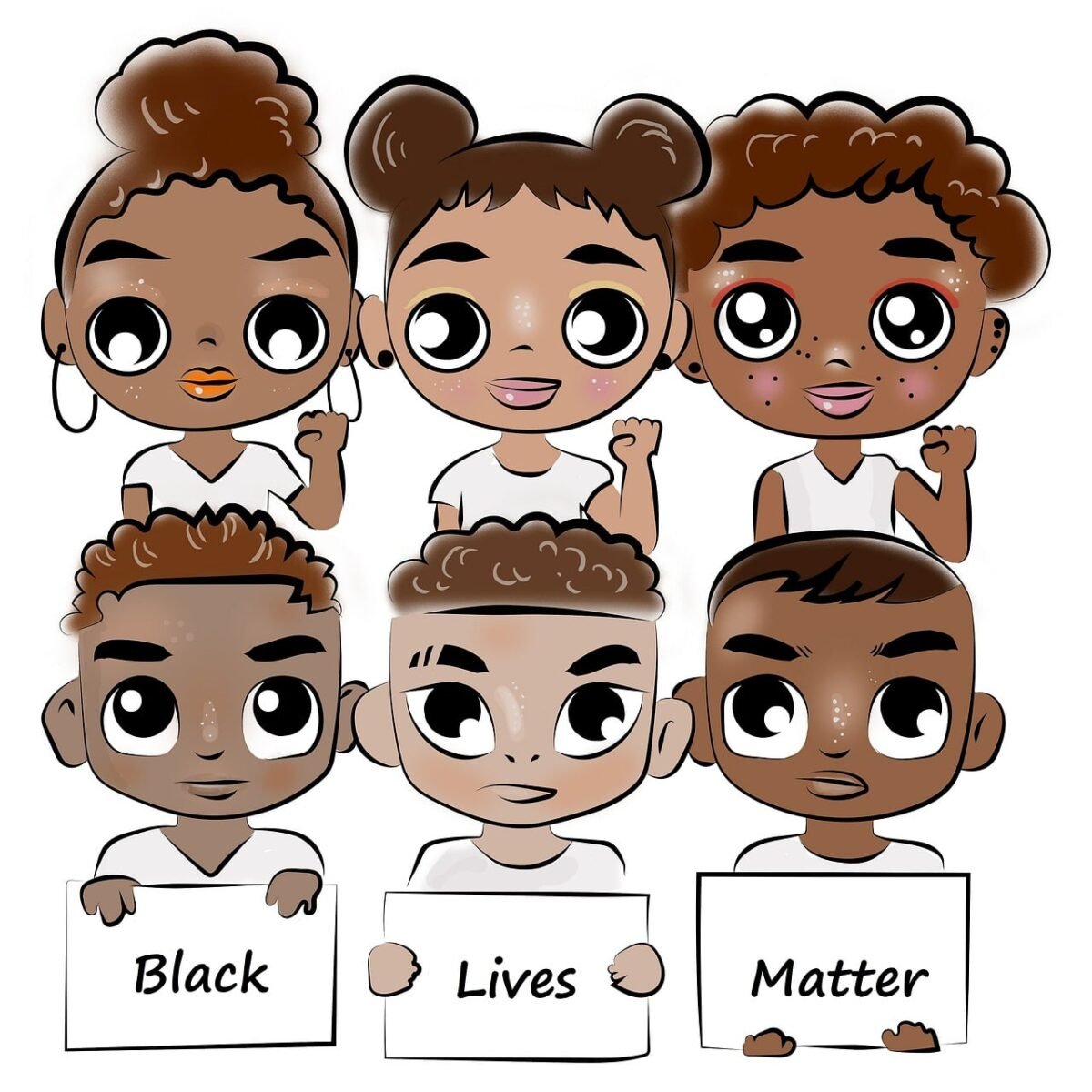
They are navigating schools, streets, stores, police encounters, online cruelty, community violence, public suspicion, and a country that often discusses their pain after the damage is already done.
This is not about panic. It is about responsibility.
Safe adults need a clear view of what Black children are facing right now, because protection cannot wait until a child becomes a headline.
1. Black children are too often treated as older than they are.
One of the most dangerous patterns facing Black children is adultification.
That means adults may see a Black child as more grown, more responsible, more threatening, or less in need of comfort than other children the same age.
This can affect how teachers discipline them, how police respond to them, how neighbors judge them, and how institutions explain away harm done to them.
A Black child’s height, tone, clothing, frustration, or fear does not erase childhood.
Safe adults should ask:
“Am I responding to this child’s behavior, or am I responding to a story I have been taught to believe about Black children?”
2. Black children are facing force in places where they should be protected.
Schools should be places of learning, guidance, and correction. They should not become places where a child’s worst moment turns into a violent public arrest.
The case of Maurice Williams, a 16-year-old Black student in California, has raised serious concerns after video showed a police officer striking him during a school arrest. His family has alleged excessive force and civil rights violations.
Whatever facts an investigation later confirms, safe adults should already be asking larger questions.
Why was force used this way?
Could trained adults have de-escalated the situation?
What was the school’s role?
What emotional impact does this have on the child, the other students who watched, and the wider community?
When children witness force against another child, they learn something about whose bodies are protected and whose bodies are controlled.
I was outraged when I saw that video. Maurice was treated in ways that we don’t treat the worst criminals. But the thing about that is, too many see young Black children and think that they are seeing “the worst criminals.”
3. Black children are often punished before they are understood.
Many children act out when they are overwhelmed, afraid, embarrassed, grieving, hungry, tired, bullied, or misunderstood.
Black children are too often denied that fuller human context.
Their distress may be labeled “defiance.”
Their fear may be labeled “aggression.”
Their self-protection may be labeled “disrespect.”
This matters because the label often determines the response.
A child who is seen as hurting may receive help.
A child who is seen as dangerous may receive force.
Safe adults should slow down long enough to ask what happened before deciding who a child is. Just like every other child, our children are not a set of dusty stereotypes. They are human beings.
4. Black children are living with the burden of public suspicion.
A Black child walking through a store, standing outside, wearing a hoodie, riding a bike, gathering with friends, or asking a question may be watched more closely than other children.
That kind of suspicion shapes childhood.
It teaches children to shrink, over-explain, stay alert, and prepare for blame.
In the killing of Cyrus Carmack-Belton, a 14-year-old Black boy in South Carolina, the public grief is tied not only to the legal outcome, but also to a painful question: Why are Black children so often treated as threats before they are treated as children?
Safe adults should challenge suspicion before it becomes pursuit, confrontation, violence, or death.
5. Black children need adults who can hold complicated facts without abandoning them.
Some cases are legally complicated.
Some children make mistakes.
Some situations involve conflicting claims, incomplete video, fear, weapons, school fights, or fast-moving encounters.
But complicated facts should not erase compassion.
A child can make a poor decision and still deserve protection.
A child can be in trouble and still deserve restraint from adults.
A child can need correction and still deserve to survive the encounter.
Safe adults should reject the habit of using complexity as an excuse to stop caring.
6. Black children are being discussed by people who do not always love them.
When a Black child is harmed, the public conversation can turn ugly fast. Lightning strike fast. All of a sudden adults start talking, but there are no adult minds in the room.
People debate the child’s clothing, family, school record, neighborhood, tone, past mistakes, and perceived attitude.
This is not truth-seeking. Often, it is reputation-stripping.
Safe adults need to recognize when public conversation has moved from accountability into cruelty.
Children should not have to be perfect to be mourned.
Children should not have to be flawless to be protected.
7. Black parents and caregivers have always been forced to prepare children for dangers other children may never have to rehearse.
Many Black families teach children how to move through stores, police encounters, schools, traffic stops, neighborhood disputes, and public spaces with extra caution. This reality is a pity and a shame, but we love our kids so we do what we must.
The preparation may be necessary, but it is also a burden.
A child should not have to carry adult-level survival instructions just to move through ordinary life.
Safe adults outside the family should not leave Black parents to carry this alone.
Schools, churches, youth programs, neighbors, coaches, store owners, and local leaders all have a role in reducing the danger instead of simply teaching children how to endure it.
8. Black girls face unique risks of being seen as too grown.
Black girls are often judged harshly for their tone, clothing, body development, confidence, anger, or emotional expression.
They may be treated as if they “know better” even when they are very young.
They may receive punishment where another child would receive comfort.
This is especially dangerous for Black girls who are being harassed, abused, bullied, groomed, or ignored.
If adults see them as grown, they may miss the signs that they need protection.
Safe adults should practice seeing Black girls as children with needs, fears, softness, innocence, and limits.
9. Black boys face unique risks of being seen as dangerous.
Black boys are often expected to manage adult fear before they are old enough to understand it.
They may be told to keep their hands visible, keep their voice low, avoid sudden movement, avoid groups, avoid “looking suspicious,” and stay calm even when adults are escalating.
That is too much pressure for a child.
A Black boy’s childhood should not depend on whether frightened adults feel comfortable around him.
Safe adults should ask whether the adults in the room are regulating themselves before demanding perfect emotional control from a child.
10. Black children with disabilities are especially vulnerable.
Black children with disabilities may be punished for behavior connected to overwhelm, communication differences, sensory distress, trauma, learning needs, or medical conditions.
When adults do not understand disability, they may treat a child’s needs as disobedience.
When adults carry racial bias, that misunderstanding can become even more dangerous.
Safe adults should ask:
Does this child need support?
Does this child understand what is being asked?
Is this child afraid?
Has anyone contacted a caregiver, advocate, disability specialist, or trusted adult?
11. Black children need community protection before crisis.
Communities often gather after harm has happened.
There are vigils, statements, hashtags, public meetings, and calls for justice.
Those responses can matter.
But children need protection before the tragedy.
That means adults should be building relationships with schools, reviewing discipline policies, attending school board meetings, asking about police presence in schools, challenging unsafe store practices, creating trusted youth spaces, and teaching children how to ask for help without shame.
A child-safety culture is built in ordinary weeks, not only after emergency.
12. Black children need adults who are willing to speak with moral clarity.
Moral clarity does not require pretending every case is simple.
It means refusing to lose sight of the child.
Safe adults can say:
A child’s life matters.
Force against children should be questioned.
Schools should protect students.
Police encounters with children should be held to a high standard.
Black children deserve patience, context, and care.
Community grief should not be mocked.
Legal outcomes do not erase moral responsibility.
That is the kind of clarity children need from adults.
What Safe Adults Can Do Now
Start close to home.
Ask your child’s school how staff are trained to de-escalate conflict.
Ask whether police are stationed on campus and what rules govern their involvement with students.
Ask how the school handles fights, emotional distress, disability-related behavior, bullying, and racial bias.
Talk to children about their rights in calm, age-appropriate language.
Teach them how to identify trusted adults.
Document concerns when they happen.
Support families when a child has been harmed.
Challenge adults who describe Black children as grown, scary, fast, aggressive, or beyond help.
Refuse to share videos of children being harmed for entertainment purposes. There is a lot of content around children that actually serves adults. Maybe slow down and ask ourselves, “Whose needs are being served by sharing this video where a child’s image is included?”
We can all do better at keeping the child at the center.
Not the politics.
Not the public relations.
Not the institution’s reputation.
The child.
Black children deserve adults who protect them in real time, not only adults who grieve them after harm is done.