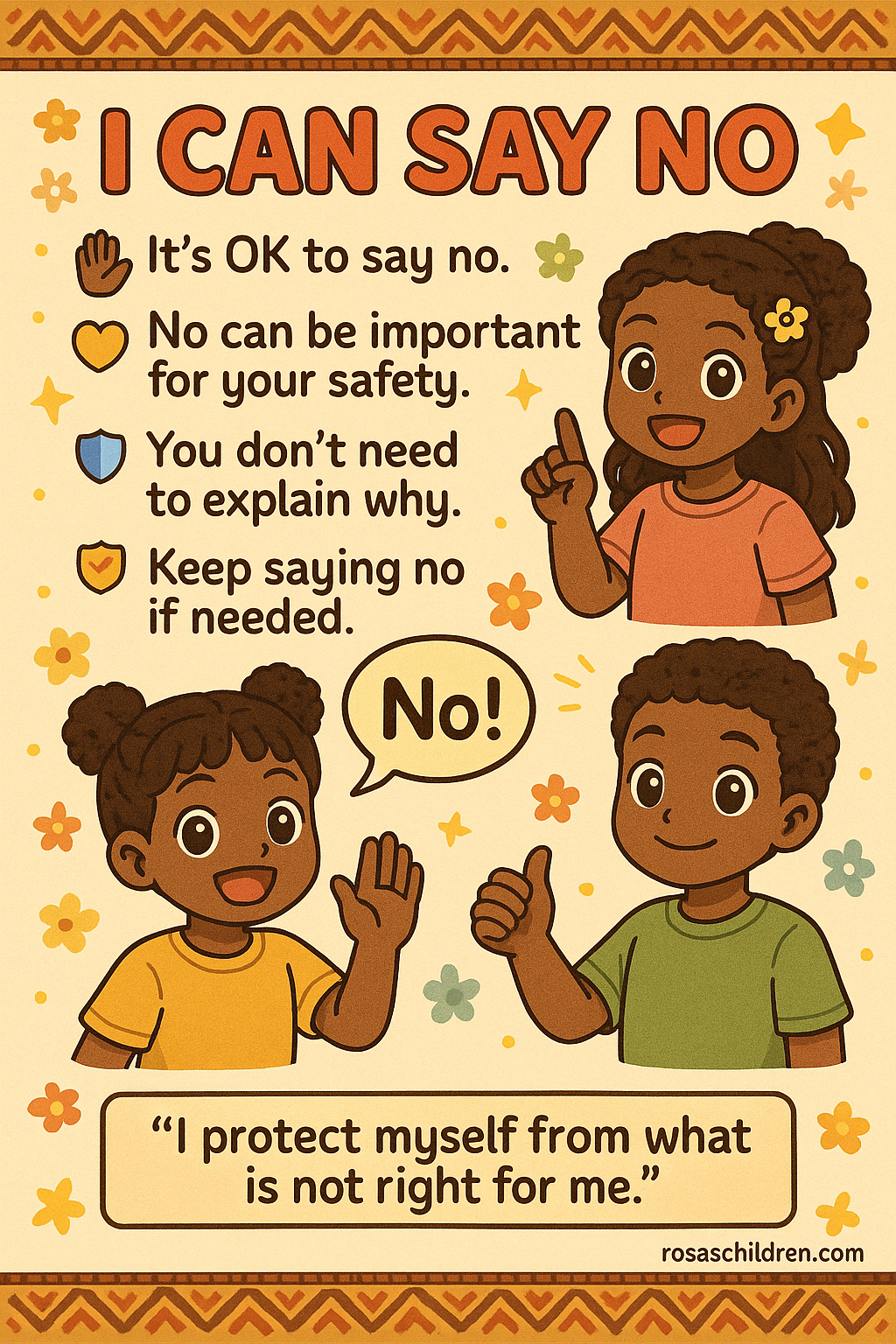
🛡️ I Can Say No One of the first ways we teach children to protect themselves is by letting them know: “You are allowed to say no.” To a hug.To a t
🛡️ I Can Say No
One of the first ways we teach children to protect themselves is by letting them know:
“You are allowed to say no.”
To a hug.
To a touch.
To a game.
To a request that makes them uncomfortable—even from a grown-up.
Saying no isn’t rude.
It isn’t bad.
It isn’t a sign of disrespect.
It’s a sign of self-trust.
When children are given the language and permission to say no, they’re more likely to:
Set strong boundaries
Speak up when something feels wrong
Recognize unsafe people and situations
Protect themselves from manipulation
Let’s teach them:
📣 “No” is a complete sentence.
💛 Their body belongs to them.
🌱 Respect goes both ways.
🧠 Safe people listen when someone says no.
Children who can say no grow into adults who know when something isn’t right—and believe in their right to walk away.
Give them the power to use their voice.
Then remind them:
“You are never too little to have a choice. And your no matters.”
🧡 rosaschildren.com