updated from 2015 Last night I was watching one of my favorite true-crime shows — a story that shook me deeply. As I read through the public reaction

Last night I was watching one of my favorite true-crime shows — a story that shook me deeply. As I read through the public reaction on social media, I saw the same old myths come back out: the same jokes, rhymes, and half-truths people trot out when a young man reports being assaulted by another man.
Here’s what I saw — and why we have to fight these lies harder than ever.
Myth 1: “If a male was raped by a man, the boy must have been gay and didn’t want to face that.”
Truth: A person’s sexual orientation does not determine whether they can be assaulted.
Rape — including male-on-male rape — is about power, control, and betrayal, not attraction or identity.
No matter who the victim is, or who he “is,” sexual violence remains a violent, coercive act. Saying “he must have been gay” damages him a second time — by making him fear for his identity instead of focusing justice on the crime.
Myth 2: “He could have stopped it if he wanted to.”
Truth: Most perpetrators groom their victims carefully. They create illusions of trust, safety, and “special relationships.”
They often use manipulation, coercion, alcohol or drugs, authority — all to incapacitate and confuse.
Teenagers are not mini-adults. They are vulnerable, still learning boundaries, deeply influenced by trust and adult permission.
Blaming a teen victim for not stopping abuse is the same as blaming a drug-addicted victim for being addicted. It misses the real crime — the predator’s calculation.
 Myth 3: “This wasn’t abuse — it was consensual”
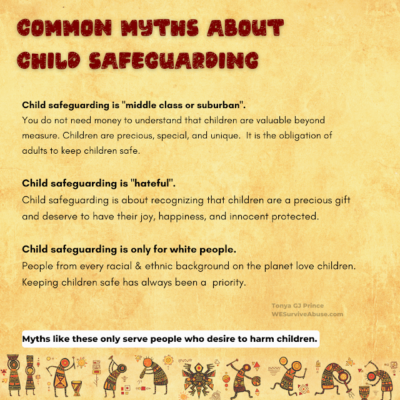 Myth 3: “This wasn’t abuse — it was consensual”
Truth: Consent from a minor is never valid. Teenagers are developing physically, emotionally, mentally — they do not carry the same capacity for informed consent as adults.
Even if the victim “looked older,” had friends, or seemed capable — none of that changes that vulnerability + manipulation = abuse.
Sexual violence against youth is always abuse. It is never teenage drama, “misunderstanding,” or “rough love.”
Myth 4: “He was a young athlete / male / strong — he should’ve protected himself.”
Truth: Physical strength does not equal power or safety. More often, what matters is control, grooming, coercion, trust — not a fight.
When someone you trust offers you a safe place, normalizes secrecy, leverages influence — muscle doesn’t matter. What matters is manipulation.
Rape isn’t about strength. It’s about access, secrecy, betrayal, and abuse of power.
What We, as the Real Adults in the Room, Must Do
Protect children, teens, and young men — always. Not just when convenience or reputation allows.
Ask ourselves: Do our laws, our policies, our communities include male victims in prevention, reporting, and healing?
Reject myths when we see them: the jokes, the assumptions, the “he must have wanted it” nonsense.
Support resources that affirm male survivors’ experiences — because silence doesn’t protect them. It endangers them further.
If you know male survivors, advocates, bloggers, counselors, or organizations working to help — let’s support them with truth, care, and respect. Not shame. Not suspicion. Not jokes.
Two organizations doing vital work for male survivors:
MaleSurvivor.org
1in6.org (honored to volunteer for a short run. This org is the real deal.)
(Also: TogetherWeHeal.org — if you focus on healing across gender lines)
If you know others — please share them. Let’s build support beyond assumptions and stigma.
Final Thought
While predators have preferences when it comes to sex, the thrill comes from predation.
There are predators who have victims that includes all boys of a certain age range and others who have all girls of a certain age range. Still, there are others who have a mix.
Rape does not strip someone of identity. It reveals cruelty.
And survivors — male, female, queer, straight — deserve language, space, and justice, no matter how uncomfortable the truth becomes.
If we keep rewriting their stories to spare comfort or protect reputations, we’re covering shame with silence.
Instead, let’s cover trauma with compassion — and cover lies with truth.
P.S. ….the idea that cultural or community rules outweigh safety rules is wrong and goes against safeguarding and protection. Not uncommon for people to have been conditioned this way though but it is not truth.
Emotions High As Former Bloomfield Football Player Sentenced In Fatal Stabbing