I've learned to respect the limitations of the human body the hardheaded way. And one of the things I've learned about myself is that it takes me a li
I’ve learned to respect the limitations of the human body the hardheaded way. And one of the things I’ve learned about myself is that it takes me a little longer to process violence, abuse, and injustice against children.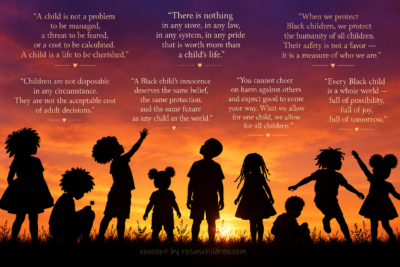
The shooting death of one-year-old Kohen Wiley outside a Walmart in Senatobia, Mississippi, is one of those stories.
On June 14, 2026, police responded to a reported shoplifting incident. An officer fired into a vehicle carrying Kohen, his mother, and another woman. The baby was killed. Authorities say the vehicle moved toward officers, and Mississippi’s attorney general has since determined that the officer’s use of force was justified. Kohen’s family disputes that conclusion.
The adults accused of shoplifting have not been charged.
And I keep coming back to something so simple.
There was nothing in that Walmart worth that baby’s life.
Not the diapers. Not the clothing. Not the merchandise on the shelves. Not the entire inventory of that Walmart.
There was nothing in that whole store worth the life of one-year-old Kohen Wiley.
I understand that police officers encounter dangerous situations. I understand that laws exist and that people have responsibilities. I also understand that we should be able to examine how an encounter over suspected shoplifting ended with a baby dead without being accused of excusing crime.
Those are not opposing ideas.
The officer who fired the shots has resigned. But resignation does not answer every question about the decisions that led to Kohen’s death.
And when people rush to explain why the shooting was justified, I wonder whether they have given as much thought to the baby who will never celebrate another birthday.
There is a difference between explaining why someone used force and asking whether the situation should ever have reached that point.
A child’s life should never become the acceptable cost of an adult’s decision.
America has a long history of struggling with that principle, especially when the children are Black.
And I want us to remember some names.
1. Latasha Harlins, 15 years old, Los Angeles, 1991.
Latasha went into a neighborhood store to buy orange juice. The store owner, Soon Ja Du, accused her of stealing. Investigators later determined that Latasha had not attempted to shoplift. After a confrontation, Latasha was walking away when Du shot her in the back of the head.
Latasha had money to pay for the juice.
She was fifteen years old.
I still wonder how many people have heard about the orange juice without ever thinking about the girl who should have grown into a woman.
2. Cyrus Carmack-Belton, 14 years old, South Carolina, 2023.
Cyrus was accused of shoplifting at a convenience store. The owner, Rick Chow, chased him and shot him in the back. Authorities said there was no evidence Cyrus had stolen anything.
In June 2026, a jury acquitted Chow of murder. His defense maintained that he was protecting his son.
Thirty-two years after Latasha Harlins, another Black child was dead following an accusation of shoplifting.
A different state. A different store. Another family burying a child.
3. Aiyana Stanley-Jones, 7 years old, Detroit, 2010.
Aiyana was sleeping at home when police entered during a raid. An officer’s gun discharged, killing her. The officer said the shooting occurred during a struggle with Aiyana’s grandmother, who disputed his account.
Aiyana was seven.
A child ought to be able to sleep in her own home without becoming a casualty of an adult operation.
4. Tamir Rice, 12 years old, Cleveland, 2014.
Tamir was playing with a pellet gun at a recreation center. A caller told dispatchers that the gun was probably fake and that the person holding it was probably a child. Those details were not passed along to the responding officers.
Within seconds of arriving, an officer shot Tamir.
A twelve-year-old boy was denied the years in which he should have been growing, learning, making mistakes, and discovering who he might become.
5. Jazmine Barnes, 7 years old, Houston, 2018.
Jazmine was riding in a car with her mother and sisters when men opened fire. She was killed, and her mother was wounded.
Investigators later determined that the gunmen had mistaken the family’s vehicle for one associated with rival drug dealers. One man was convicted of capital murder.
Jazmine had nothing to do with their conflict.
She was seven years old, riding with her family. That should have been an ordinary day.
6. Ma’Khia Bryant, 16 years old, Columbus, 2021.
Ma’Khia was in foster care when police responded to a confrontation outside a home. Body-camera footage showed her swinging a knife toward another young woman when an officer shot and killed her. A grand jury declined to indict the officer.
People disagreed fiercely about the shooting and the immediate danger to the other young woman.
But Ma’Khia was also sixteen. Her death raises painful questions about how children in crisis reach the point of deadly confrontation, and whether adults and institutions have done enough before those final seconds arrive.
7. Aderrien Murry, 11 years old, Mississippi, 2023.
Aderrien survived, and I want to include him because we should not have to wait for a child to die before taking his experience seriously.
His mother asked him to call for help during a domestic disturbance. When police arrived, an officer shot Aderrien in the chest. He suffered serious injuries, including a collapsed lung.
Imagine being eleven years old, calling the people you have been taught to trust in an emergency, and ending up in a hospital bed with a gunshot wound.
His survival does not make what happened unimportant.
8. Kalief Browder, arrested at 16, died at 22. New York, 2015.
Sometimes injustice kills immediately. Sometimes it leaves injuries that follow a child into adulthood. Both deserve our attention.
Kalief Browder was sixteen years old when he was accused of stealing a backpack. He maintained his innocence. He spent three years at Rikers Island waiting for a trial that never happened, including approximately two years in solitary confinement. He endured violence, isolation, and repeated mistreatment. Eventually, prosecutors just dropped the charges but the damage. The trauma…..that was complete.
We have adults who murdered people who get out of prison in like 4 years on manslaughter. Why did you do this to this child? How could you? How was this allowed?
Being released did not erase what had happened to him.
Kalief struggled with the psychological injuries he carried home. In 2015, two years after his release, he died by suicide at twenty-two.
His family spoke openly about the damage his incarceration had done. And I think we owe Kalief the dignity of remembering that he was a child when the system first took him away.
He was never convicted of the crime for which he lost three years of his youth.
A child can survive an injustice and still lose his life to its consequences years later.
That is why protecting children means more than keeping them alive through the immediate danger. It means refusing to subject them to treatment that destroys their health, hope, dignity, and ability to build a future.
Kalief Browder deserved a childhood. He deserved due process. He deserved protection from abuse while in custody. And he deserved the opportunity to become an adult without carrying the injuries of an ordeal that should never have happened.
We cannot call a system just simply because it eventually opens the door and lets someone leave.
Freedom should not arrive only after the damage has been done.
Oh I could go on …..
I think one of the most dangerous things we have allowed ourselves to do is become comfortable explaining away harm against other human beings either directly or by the policies of our elected leaders.
Especially children.
There is always an explanation waiting. Someone was “frightened.” Someone was “angry.” Someone believed a rule had been broken. Someone was “protecting property” Someone was “trying to maintain order.”
Sometimes the explanation contains important facts. We should examine those facts carefully. But the explanation is not the child.
And we ought to be able to hold on to the child’s humanity while examining everything else. That is where we expose our weaknesses.
The moment we become more concerned with defending an adult’s actions than understanding how a child ended up dead, we need to examine our priorities.
Black Americans have been talking about this for generations.
We’ve talked about children being treated as older than they are. Black girls being denied innocence. Black boys being perceived as threats. Families being expected to accept explanations that would never satisfy people if the child belonged to them.
And we have been told to “calm down,” “stop making everything about race,” “wait for the investigation,” or “understand how difficult the circumstances were.”
Sometimes the investigation reveals facts that change our understanding of an event. That is why evidence matters. BUT evidence should never require us to surrender our concern for the child and remember that the human beings outside of a woman’s womb deserve safety, care, love, and life provisions that sustain their survival.
There is something else I wish more people understood.
You cannot build a society that treats some children as disposable and expect every other child to remain safe.
See the defense of guns over the lives of children. We now have Survivors of gun violence in one generation, comforting the little Survivors just born practically yesterday. Yes, that is who we are. Until we confront it, we can’t change it.
People have sometimes described Black Americans as the canaries in the coal mine of this country. There is a reason that comparison has lasted.
Back in the day, a canary was carried into a mine because its vulnerability could warn miners of dangerous conditions before the danger overwhelmed everyone.
But imagine hearing the warning and deciding that the canary was the problem.
Imagine spending your time explaining why the canary was “too sensitive” or a “victim” or “playing the bird card” instead of asking what was poisoning the air.
That is how some of our public conversations sound.
Black families have been warning this country about the devaluing of children’s lives for a very long time. And the consequences of tolerating cruelty, reckless decisions, poor safeguards, and unequal protection do not remain neatly contained within one community the way too many people think that they do.
Eventually, other families encounter those same failures.
That is not a wish for anybody else’s suffering. Quite the opposite.
It is a warning born from history and experience.
We cannot keep cheering when harm happens to people we dislike, or people we believe have broken rules, and expect the habits of indifference we are cultivating to stop at our own front doors.
A society does not become safer by teaching its people which children are acceptable losses.
And I want to say something about all the public declarations of love for children. I hear them.
We hear them during elections. We hear them in speeches, sermons, campaigns, and fundraising appeals. We hear people talk about family values and protecting the next generation. The winter holidays are coming and we are going to hear it set to Christmas carols.
Talk is the only thing left around here that is still cheap.
What happens when a child needs protection outside the womb?
What happens when the child is poor? When her parents are struggling? When he lives in a neighborhood people have already decided is dangerous? When the child is Black, disabled, in foster care, or caught in an adult conflict?
Does the concern remain?
Because children are not public relations opportunities. They are not props for speeches. And they are certainly not disposable because an adult made a mistake or someone believes a law was broken.
Children do not have to earn their right to remain alive by being perfectly behaved, perfectly supervised, or born into perfect circumstances.
I wish we could get that much settled.
And this concern reaches far beyond America.
Children around the world are living through wars, displacement, hunger, exploitation, abuse, and decisions made by adults who will never personally experience the consequences.
Their lives are just as valuable.
We have become very skilled at explaining the world’s problems. We can describe economic pressures, political disagreements, security threats, and competing interests.
But what kind of world are we building if children keep paying the price?
I am not asking for a world without laws, accountability, or consequences. I am asking for a world in which the lives of children are considered before decisions are made that cannot be undone.
I am asking adults to remember that their power comes with responsibility.
I am asking institutions to measure their success by more than whether their actions can be defended afterward.
And I am asking people to resist the temptation to justify harm simply because they dislike someone involved.
A child is not an extension of every decision made by the adults around her.
A baby is not responsible for an accusation against his mother.
And the value of a child’s life does not rise or fall with the circumstances of his family.
Kohen Wiley should have had another birthday.
Latasha Harlins should have had the opportunity to grow old. So should Aiyana, Jazmine, and the little girls of Birmingham.
There are families who will spend the rest of their lives loving children they can no longer hold.
Meanwhile, the rest of us still have decisions to make about the kind of society we are willing to accept.
I have learned to respect the limitations of my own body, including when I need time to process another terrible story. But I hope I never become so accustomed to these stories that I stop feeling the weight of a child’s life.
We should never have to explain why a baby matters more than merchandise.
And we should never become so comfortable with the loss of other people’s children that we forget we are shaping the world in which our own children must live.
There was nothing in that Walmart worth Kohen Wiley’s life.
There is nothing in the world worth teaching ourselves that some children simply do not count. This is why we don’t want to see videos of police officers dancing with children, or playing basketball with the children, or buying from their lemonade stand. I want to see the children treated like human beings even if mistakes from them or their families is suspected. I want to see Black children given care, concern, respec, and compassion.
Former Senatobia officer who shot Kohen Wiley named in previous lawsuits
Police Hurt Thousands of Teens — Many Are Black Girls | The Marshall Project
‘Strung Up’ Explains How White America Learned to Lynch Black Children – New York Almanack
Criminalizing Blackness: Prisons, Police and Jim Crow
Report: Police in schools have outsize effect on Black children
Why Ending Police Violence and Racist Policing is a Children’s Issue – Children’s Defense Fund
Police violence against children sparks demand for use-of-force laws
Black children make up more than half of the incidents of police using force on kids : NPR