Child marriage is a real concern in the United States, even though many people assume it only happens elsewhere. The scale is smaller than in some cou
Child marriage is a real concern in the United States, even though many people assume it only happens elsewhere. The scale is smaller than in some countries, but it still happens, and advocates, educators, and Survivor organizations have been raising alarms for years.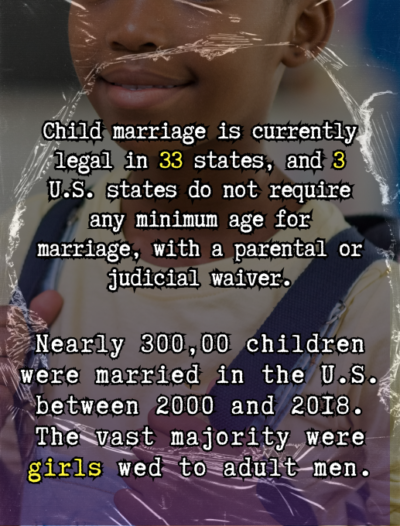
Here is the part that surprises many people: in much of the U.S., people under 18 can still legally marry through exceptions such as parental consent, judicial approval, pregnancy exceptions, or emancipation rules. Marriage law is handled by each state, so protections vary widely. As of 2026, some states have fully banned marriage under 18, while others still allow it under certain conditions. A few states historically had no clear minimum age if exceptions were granted.
The numbers are also larger than many expect. Research estimates that more than 300,000 minors were legally married in the U.S. between 2000 and 2021. The overwhelming majority involved girls, often married to adult men.
Why advocates worry about it:
Young people in marriages can face higher risks of coercion, isolation, interrupted education, poverty, early pregnancy, and domestic violence.
Minors often have fewer legal protections. In some states, a minor may be considered mature enough to marry but still too young to independently file for divorce, sign a lease, enter a shelter, or fully access legal services.
Some advocacy groups argue that marriage loopholes can function as a way around statutory protections designed for minors.
Still, we have to keep in mind that some marriages involve two older teenagers close in age and family approval. The ones that cause concern are the ones that we think happen “other places.” According to Survivor advocates and legal organizations, it involves pressure, family coercion, pregnancy, religious pressure, immigration concerns, or much older adults. That is part of why the issue is debated state by state.
One thing many people do not realize is that this has become an active reform movement in the U.S. Since 2018, a growing number of states have raised the marriage age to 18 with no exceptions. Virginia, for example, changed its law in 2024.
Important U.S. stats:
Between 2000 and 2021, nearly 315,000 children were legally married in the U.S. Most were girls, and many were married to adult men.
Girls who marry before 19 are 50% more likely to drop out of high school and four times less likely to complete college than girls who do not marry young.
Women who marry before 19 have a 23% higher risk of serious health conditions later, including diabetes, cancer, heart attack, or stroke. Teen girls who marry are also more likely to become pregnant, have children earlier, and have closely spaced births.
Child marriage is also linked to higher risk of intimate partner violence, mental health distress, poverty, divorce, and lost earning power. The research does not say every girl’s life is ruined, but it does show the odds tilt hard against her.
The plain truth: when a girl is married off, society often calls it “family business” or “tradition,” but the outcome can look like school interrupted, childhood ended, pregnancy rushed, freedom narrowed, and escape made harder.
Child marriage is not only a wedding issue. It is an education issue, a poverty issue, a health issue, a domestic violence issue, and a child protection issue.
United States’ Child Marriage Problem: Study Findings 2000-2021 – Unchained At Last
Protecting Girls from Grooming: Lessons from Courtney Stodden’s Lifetime Movie – Rosa’s Children
child-marriage-in-the-US-prevalence-impact_8-2020_ICRW.pdf
Child-Marriage-Impacts-One-Pager-updated-5.8.-2020-REGULAR-PRINT.pdf
Podcast Episode: The Fable of the Little Bell at Carver School – Rosa’s Children
Wisconsin legislators aiming to ban child marriage—no exceptions – FreedomUnited.org
Educators Sound the Alarm on the Dangers of Child Marriage | NEA